Plan the route from door to chair to payment
Before you buy anything, walk the route a client takes: arriving, leaving a coat and bag, waiting for a moment, sitting down, being treated, paying and leaving. Do it slowly, with an imaginary client, and note every place where someone has to squeeze past furniture, ask where to put something or stand around unsure.
In a small space the route should be short and obvious. Keep the path from the door to the chair clear, put the payment point near the exit rather than beside the work area, and make sure you can reach your tools without turning your back on the client for long.
- A clear path from the door to the chair
- A place for coats and bags that is not the treatment surface
- Tools within arm's reach of where you stand
- Payment and goodbye near the exit
Reception and a waiting corner in a small space
You do not need a reception desk to feel welcoming. One comfortable seat, a small side table, a hook and a clear spot to say hello is enough. A corner that looks deliberately arranged tells the client that someone has thought about their visit.
If clients rarely wait because you schedule carefully, the waiting corner can be tiny and double as the place where you keep a few products on display. Keep it tidy and free of paperwork, because a pile of papers in the first thing people see undoes the rest of the room.
Light the room by task
Lighting does two different jobs in a studio. For colour work and for looking closely at skin, you want even, natural-feeling light that falls on the work without harsh shadows or a strong tint. For relaxation, you want something softer and lower, so the same room can change character depending on what is happening in it.
The simplest way to get both is layers: a main light that is even and bright enough to see detail, plus softer lamps you can switch to when the work is calm. Being able to change between them with a switch or a dimmer matters more than the exact fixtures. If you have a window, use it, but do not rely on it, because daylight changes through the day and through the season.
- Even, bright light over the treatment area
- Soft ambient lamps for rest and conversation
- A dimmer or separate switches for the two
- Avoid light that casts hard shadows over the work
Mirrors and storage that hide clutter
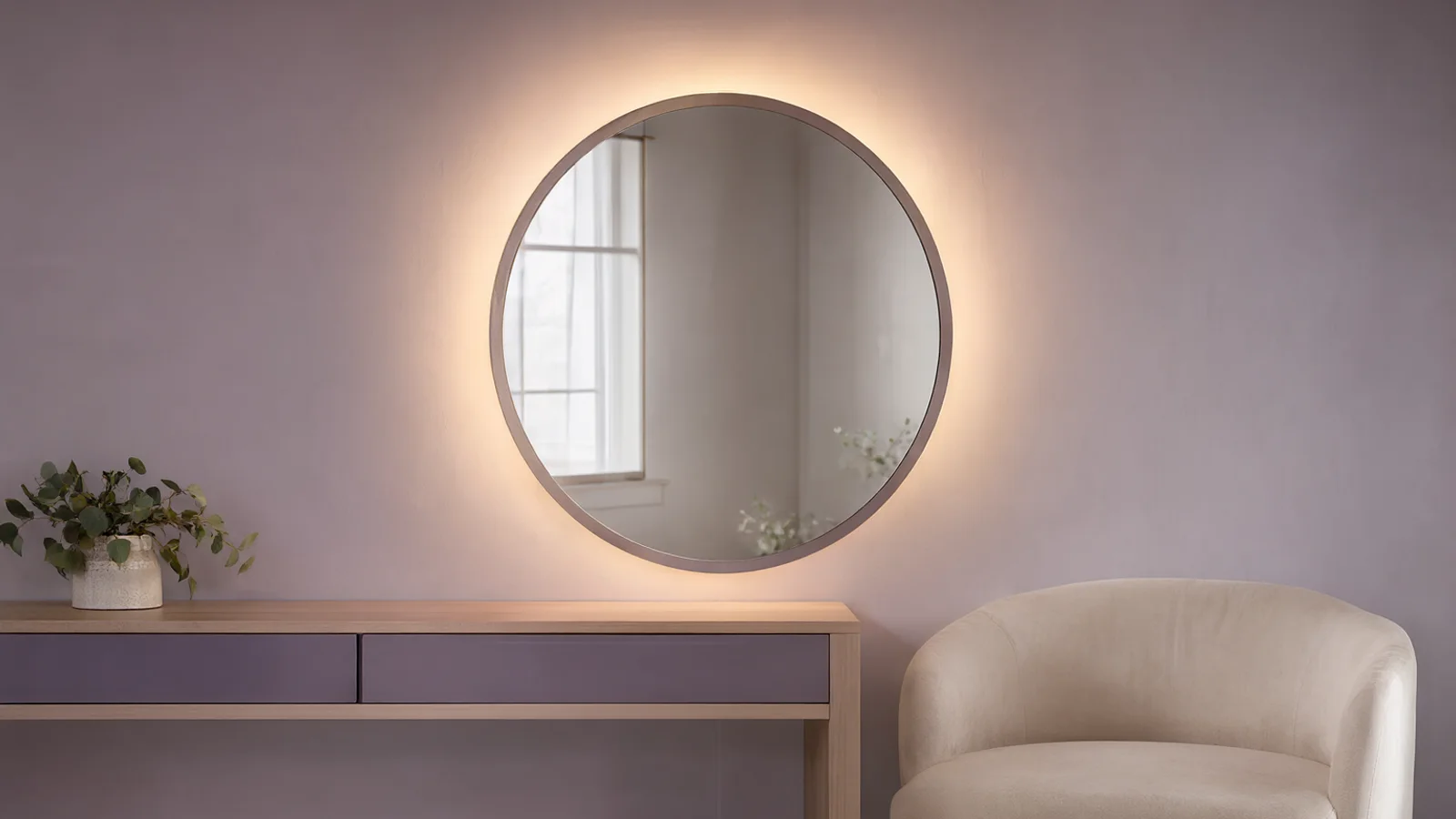
A well-placed mirror makes a small room feel wider and brighter, and clients appreciate seeing the result at the right moment. Place it so it reflects something pleasant, such as a window or a plant, rather than your supplies shelf.
Storage is what separates a calm room from a busy one. Closed cupboards, boxes with lids and trolleys that tuck away let you keep everything you need close while the room looks clear. Give every item a home, and make putting things back as easy as taking them out.
- Closed storage for products and spare supplies
- One tray or trolley for the current client's tools
- A mirror that reflects light, not clutter
- A fixed place for every frequently used item
Colour and materials that feel calm and clean
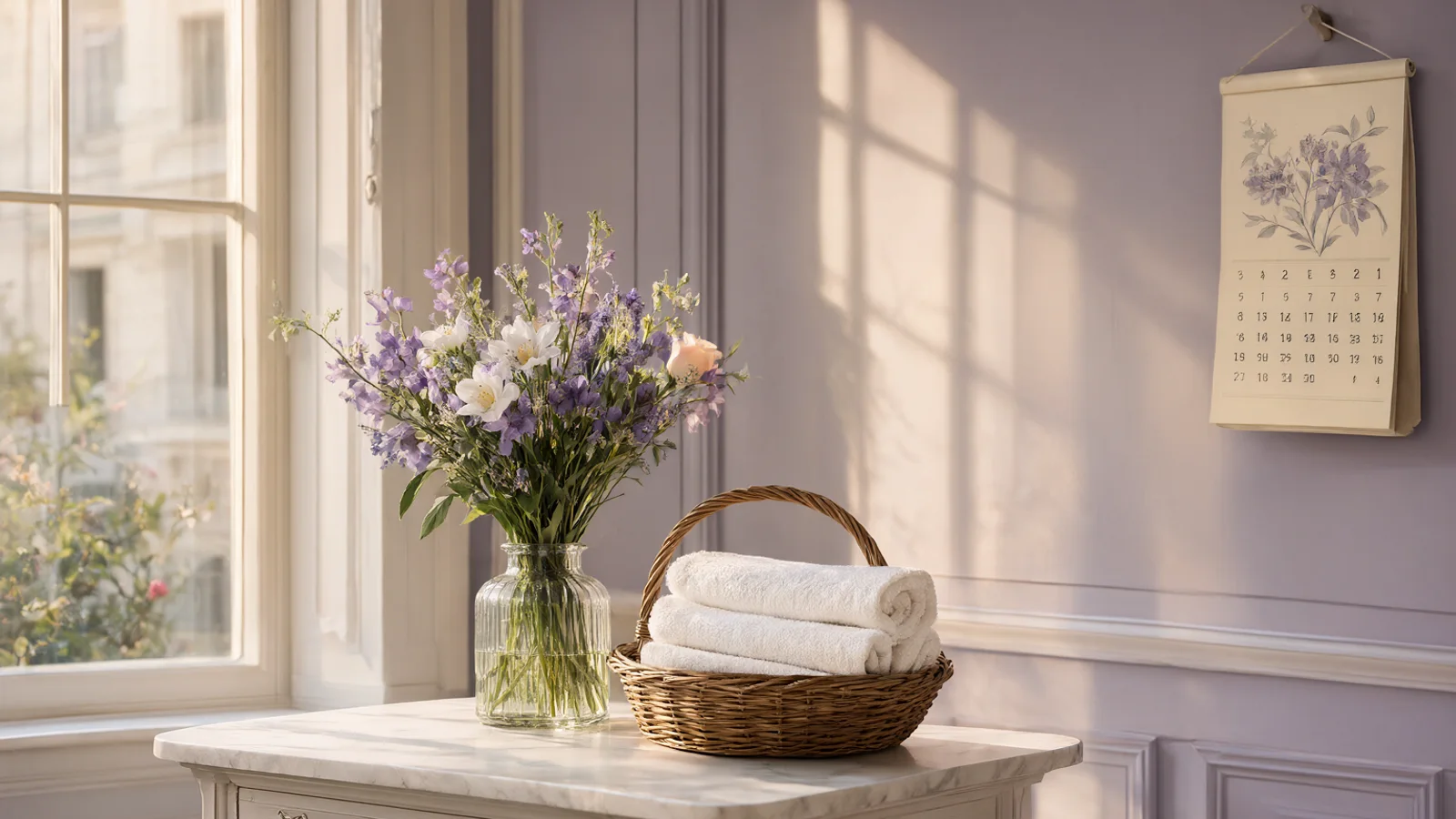
Soft, quiet colours tend to make small rooms feel larger and more restful, and a limited palette looks intentional. Choose two or three main shades and repeat them in towels, cushions and accessories. A single accent colour, such as one shade in a plant pot or a print, gives personality without noise.
Think about touch as well as sight. Natural-looking textures such as wood tones, linen-like fabrics and matte finishes tend to feel warmer than glossy plastic. Choose items you can keep looking fresh, because a room that is easy to clean is a room that stays calm.
Hygiene-friendly surfaces
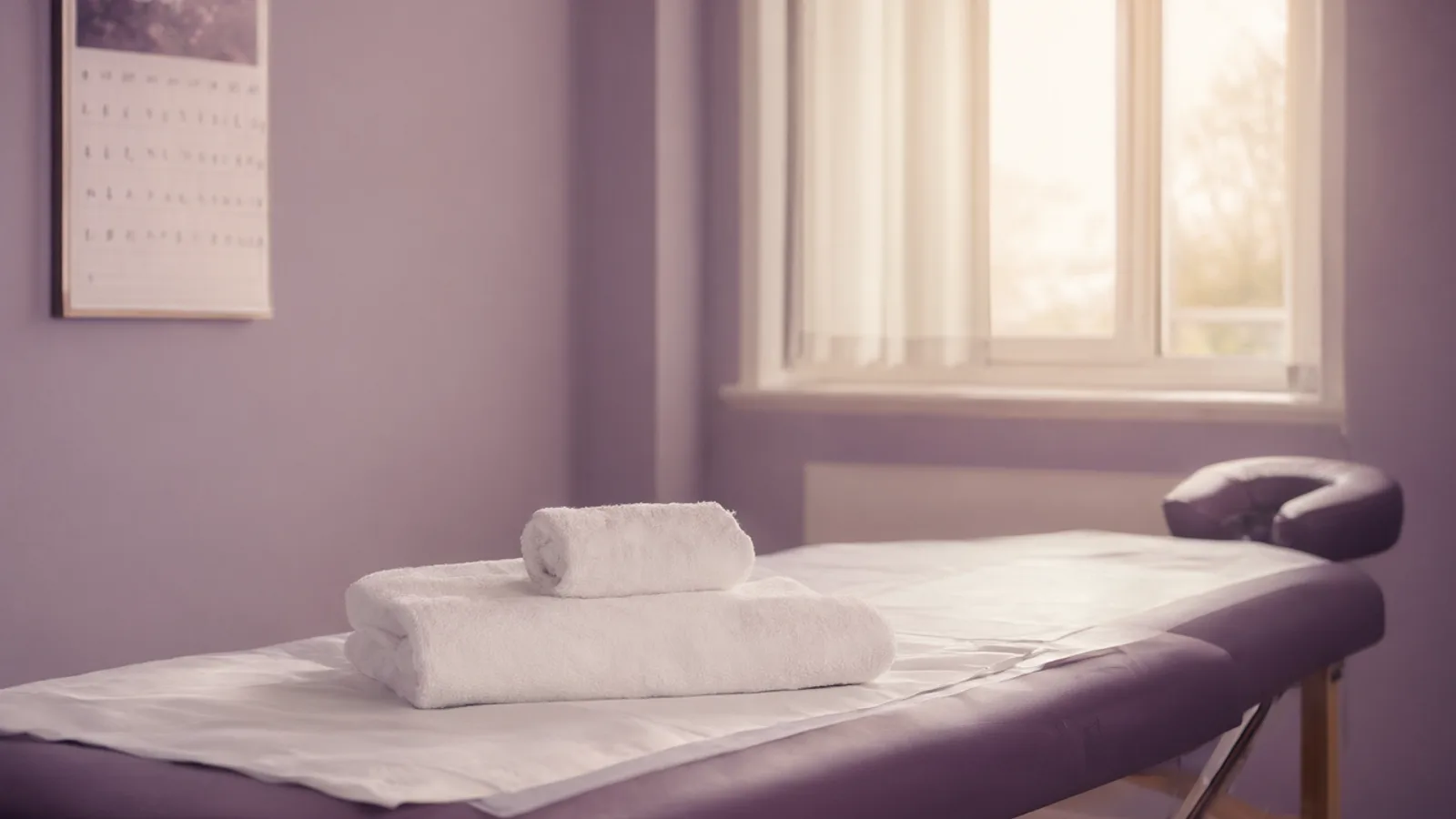
Wherever clients sit, lie or rest a hand, the surface should be smooth, non-porous and easy to wipe down between visits. Fabric that is hard to clean, rough wood and decorative items that collect dust belong away from the treatment area. This is not only about appearance; it makes your cleaning routine faster and more consistent.
Rules and standards for hygiene differ depending on your profession and where you work, so check what applies to you with your professional body or local authority. The aim here is a space that is practical to keep clean, which also happens to look professional.
A clear sign and a photogenic corner
A clear sign helps new clients find you and tells existing ones they have arrived. Keep the name readable from a short distance and make sure the entrance, buzzer or door number is obvious, so nobody arrives stressed and late because they could not find the door.
Choose one corner as the place where you take photos of your work and the space. A neutral background, good light and a tidy shelf or plant are enough. Having a ready-made spot means you can share work consistently without rearranging the room each time, and clients who want to share their own photos have somewhere pleasant to do it.
Sound and scent: restraint wins
Some clients love music and a pleasant fragrance; others find them distracting or are sensitive to them. A low, steady sound that does not demand attention is usually safer than a playlist with strong opinions, and some clients will prefer quiet.
Keep scent light or absent, and never rely on it to hide a cleaning problem. A simple approach is fresh air, a clean room and an easy way to ask clients their preference, so a small studio can feel personal without overwhelming anyone.
Where to spend first, and where the schedule comes in
If your budget is limited, spend in the order the client experiences it: lighting and cleanliness first, then comfortable seating and a reliable surface to work on, then storage, then decoration. Paint, plants and a few considered accessories often do more than expensive furniture, and they can be changed later as the business grows.
The room also depends on time. If appointments run back to back, there is no moment to wipe down, reset the space and put things back, and the calm you designed disappears by mid-afternoon. Leave a short buffer between clients, using a gap in your calendar or a short blocked entry, so the room is ready before the next person walks in.
- Lighting and cleanliness
- Comfortable seating and a dependable work surface
- Storage that hides clutter
- Colour, plants and finishing touches
- A short buffer in the schedule to reset the room
Questions people ask
What matters most in a very small studio?
Light, cleanliness and a clear route from the door to the chair matter most, because clients notice them first. Decoration can come later.
Do I need a separate waiting area?
Not necessarily. One comfortable seat and a tidy surface is often enough, especially if you schedule so clients rarely wait.
Should I choose warm or cool light?
It depends on the work. Use even, natural-feeling light where you need to judge colour or skin closely, and softer, warmer light for relaxation, ideally with a way to switch between them.
Is background music or scent a good idea?
Keep both light. Some clients are sensitive to them, so a quiet, steady background and a fresh, clean room is a safer choice.
How long should I leave between clients to reset the room?
It depends on your service and how much needs cleaning, so work out how long a calm reset really takes and add it to your schedule as a buffer. A free calendar, including the one on Lumea, lets you block that gap.
General information for small businesses, not legal, tax or financial advice. Check the rules that apply to you with a professional.